Week 7: Has your education failed you?
I was taught from a very young age that as a student, success looks like good grades, and quick
responses with correct answers. After all, no kid ever wants to have the worst grade in the class,
or to be the last one to find the answer, and that seems to be the biggest theme of my entire
childhood experience. Starting elementary school at the age of five, I feel as though I was a very
excited student, eager to learn as much as possible. From what I remember, I had an amazing time
succeeding throughout these years, and I remember the contentment I would feel as I would be the
first one to finish a test, the first one to get the answer right in front of the whole class, and even to
be the student that finished early and got to help out other students afterwards. At this age, I had an
older sister at home who I got to see do her homework and succeed in school, which ultimately
motivated me to do the same. In addition, from the time before I had even begun school, my mom
would always bring home “fun activity” books and every single night we would work together to
learn a new skill before I had the opportunity to learn that skill in the classroom. Quickly, I found
school to almost be “too easy” because I already knew about the majority of the lessons my teachers
were teaching, which allowed me to never have to study, or to even schedule more than twenty
minutes to do my homework outside of school. After being labeled as “gifted” and receiving a
variety of awards for being “such a great student” I felt as though the whole learning process took
little to no effort.
Now, as a college student aspiring to be a teacher, I feel almost as if I have been betrayed by the school system, and I want to change the aspect of memorization and testing that seems to be so highly valued in classrooms today. I want my elementary students to feel as confident as I did in elementary school not because they are getting the answers right the fastest and acing their quizzes, but because they’re asking good questions, learning how to study ideas that they may not have any background knowledge on, and/or because their answer today has improved from yesterday, even if it still isn’t all of the way there. Overall, I want the classroom to be a place where teachers are passionate, and students are able to learn how to actually learn.
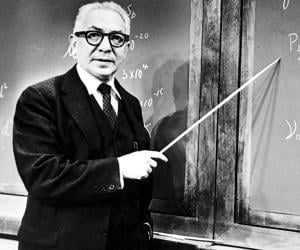
Isidore Rabi, winner of a Nobel Prize for physics, was once asked why he became a scientist. He replied: "My mother made me a scientist without ever knowing it. Every other child would come back from school and be asked, 'What did you learn today?' But my mother used to say, 'Izzy, did you ask a good question today?' That made the difference. Asking good questions made me into a scientist."

This reminds me of my big brother early on. He was always so much smarted than I was and would easily understand the homework. In the mean time I would struggle to read and write during elementary school.
ReplyDeleteThe current public school education can suck the life out of you. So much attention is put on getting good grades, not necessarily being creative and gifted at what you can do. This can be super discouraging for an insecure middle/high school student. You become numb to actually learning the material you have, instead you kind of manipulate how to get a high grade. You make some good points here. Hopefully you can help be the change you want to see in the education system. I believe it is time to shake things up a bit. Go for it!!
Your experience in school speaks to serious flaws in education that I have seen myself. You describe the situation well. Many students are blindsided by college. In some ways it is exactly the same - I had classes that were easy to get by in and I had classes that challenged me mentally and emotionally because I did not develop good habits in high school.
ReplyDeleteI suggest changing the language so that it uses active voice. There is mostly passive phrases here, "I was taught," "I would feel," and "I had even" take away potential power of your sentences.
"I was taught from a very young age that as a student, success looks like good grades, and quick
responses with correct answers" may work better as "I learned at a young age that student success looks like good grades and quick responses with correct answers."
In my own writing, I use passive voice frequently when describing the past and struggle to bring myself out of that habit. Until recently, I did not understand why passive voice was problematic or how to simply not use it. I try to write with the purpose of getting all my thoughts down and organizing, proofreading, etcetera, afterwards - much like King described in his memoir. I'm working on fixing passive voice (I had even begun) to be active (I began), and to remove adverbs (actually) which I add to feel that the phrase is gaining strength, but when I reread it with or with out it, I realize they take more than they add.
I also want to comment on the view that teachers aren't passionate. I feel this way at times, and certainly did in high school. As I make my way through college, though, I wonder if teachers appear to not care because they cannot simply share interesting collections of facts. Teachers must provide structure, design a cohesive course and grade homework and quizzes, and, depending on their area and level at which they teach, they may also have to research and/or get published. Teachers must play many roles, which I would imagine is very draining at times. I would love to see more teachers show passion for their subject, but many are probably doing their best given the circumstances.
I really appreciate your constructive criticism on the passive voice. While I was writing and rereading my memoir, I felt like there was something missing and I couldn't quite put my finger on what it was but I think you're right! In addition, your comment regarding teachers being more/less passionate made me think a lot more into my personal experiences, as well as question specifically what I would do as a teacher to show my passion. In college, I feel like the professors are more passionate but I also wonder if that is because we are older students that are able to have more in depth conversations, and read in between the lines. Maybe I was too focused on studying/completing my work to notice this throughout my previous years, but it is something to think about.
DeleteI know exactly what you mean. It was very demoralizing as a student to realize all you had to do was memorize the tests. There is no incentive to learn or to develop the skills that allow people to learn. It is a complete failure on the school system. The thing that kept me wanting to learn, and even become a teacher myself, was though few teachers who really cared. They took the time, showed their passion for teaching and learning, and truly wanted to see their students succeed. I wish I could've seen some examples of how you think you could change this system. Is there certain teaching styles that could lead to kids actually learning things? What inspired you to decide to pursue teaching? Did you have any teachers that stood out and inspired you? I hope that you can achieve your goal though. Nothing feels better than the validation of learning and growing as a person.
ReplyDeleteWhiffleball makes a good point about weaving in some more examples to show your readers. In spots, you get caught up in details. Maybe move the quote up to the start and weave in some ideas connecting it in your account. Your authentic voice, however, will resonate readers and make them think about the value of learning.
ReplyDelete